

Sustainable management policy
- HOME
- Sustainable management policy
- Sustainable management policy
Sustainable management policy
ESG Management
About ESG Management of DKT
Environment

Social Responsibility

Corporate Governance
ESG stands for Environment, Social Responsibility, and Governance, which refers to that sustainable growth is available only when companies take the lead in protecting the environment and implement ESG management activities including social contribution and ethical management activities such as support for the socially disadvantaged and the creation of a gender-equal workplace culture.
In the European Union and the United States, it is already a significant criterion for evaluating companies, and it is now spreading worldwide. It is not yet common in Korea, but DKT has been practicing ESG management since the establishment.
E (Environment)
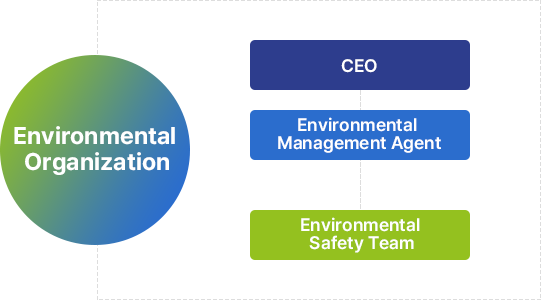
Our company is the corporate that develops and supplies FPCA modules via SMT (Surface Mount Technology), and to implement this, it goes through diverse processes and environmental pollutants are emitted from each process. We have obtained and maintained ISO14001 (Environmental Management System) and ISO45001 (Safety and Health Management System), which are international certification standards. Our company properly operates prevention facilities to discharge wastewater and air pollutants containing certain harmful substances below the permissible standards demanded by the Environment Related Act. In particular, we separate recyclable types of industrial wastes generated and induce resource recycling. Moreover, we continuously manage periodic measurement, problem extraction, and improvement to check the proper treatment of emission pollutants. Our company manages major pollutant items that are discharged and managed annually in accordance with the standards set by the Enforcement Rules of the Clean Air Conservation Act.
Certificate
DKT
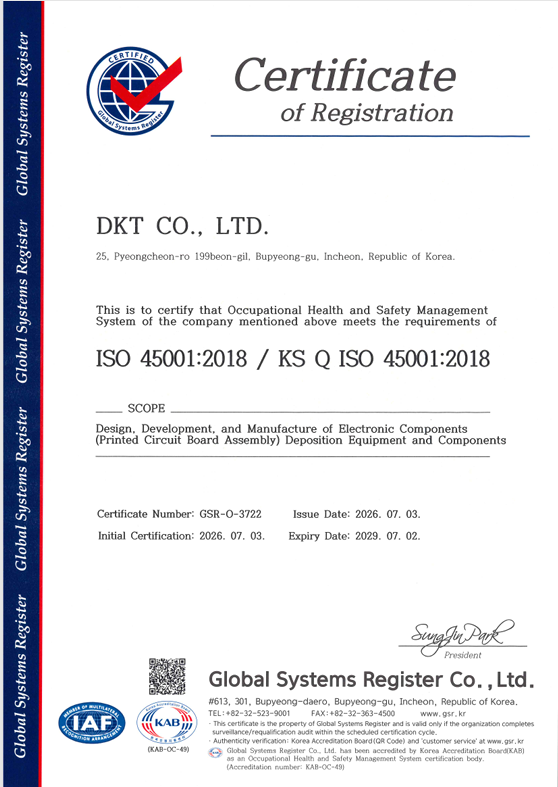
ISO 45001
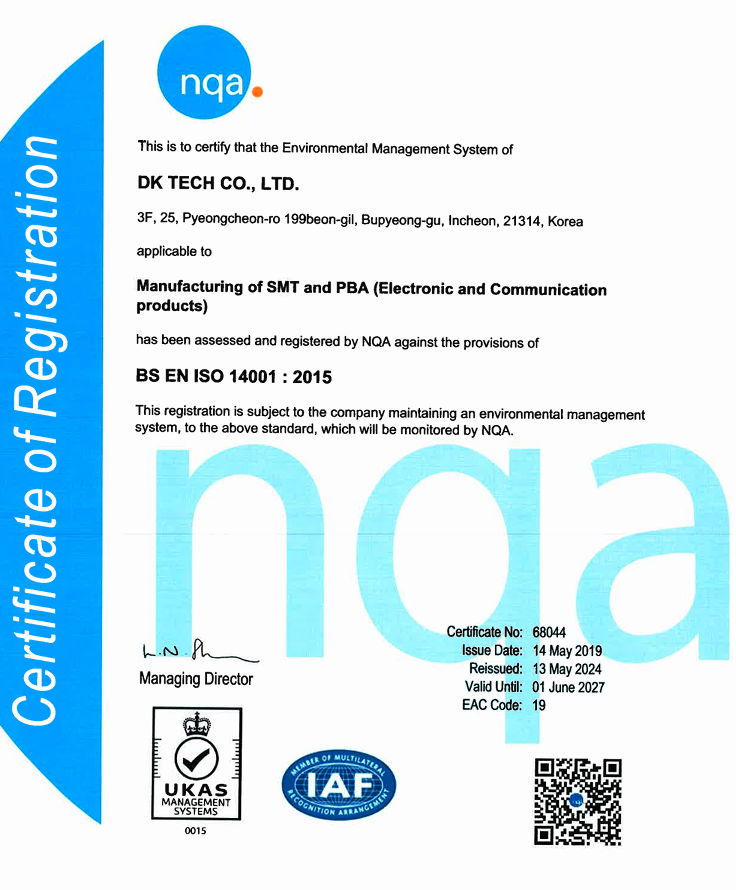
ISO 14001
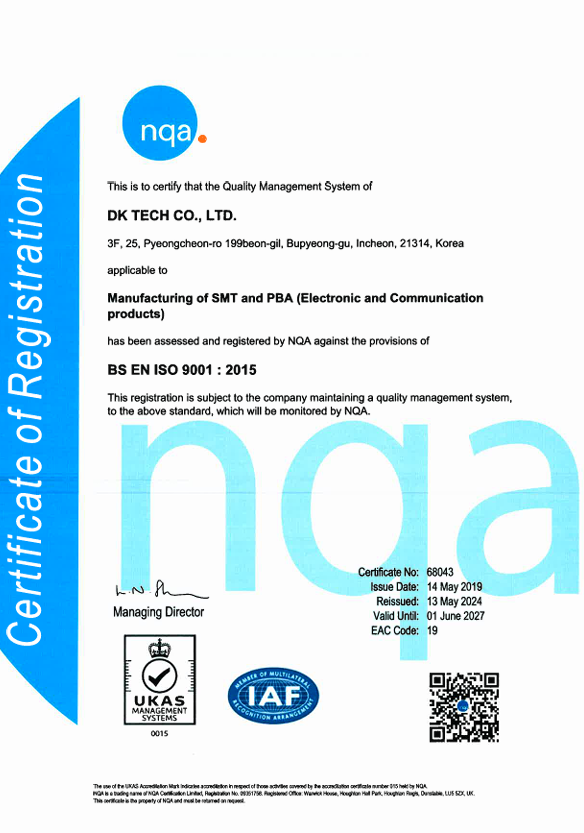
ISO 9001
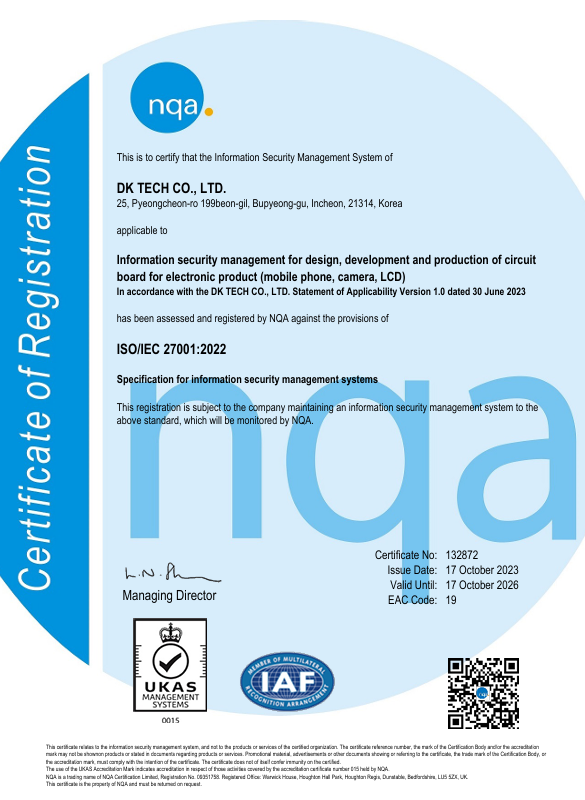
ISO 27001
DKT VINA
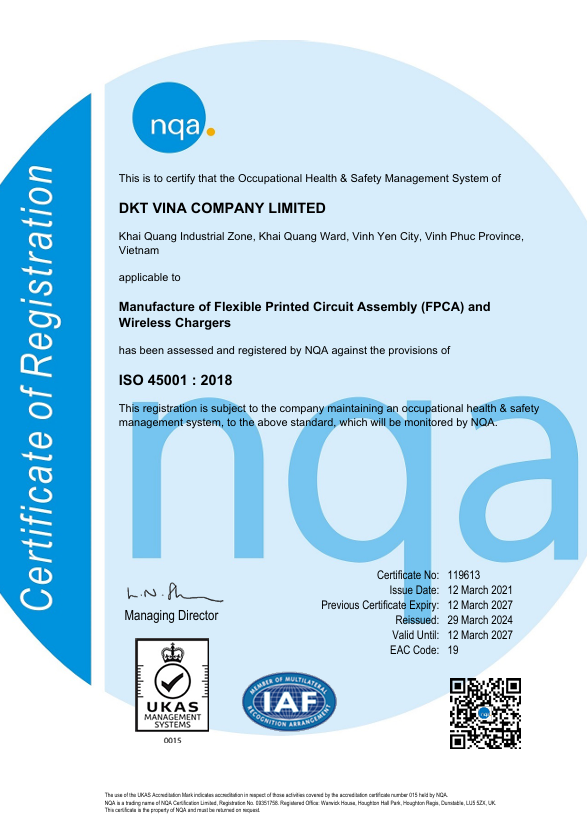
ISO 45001
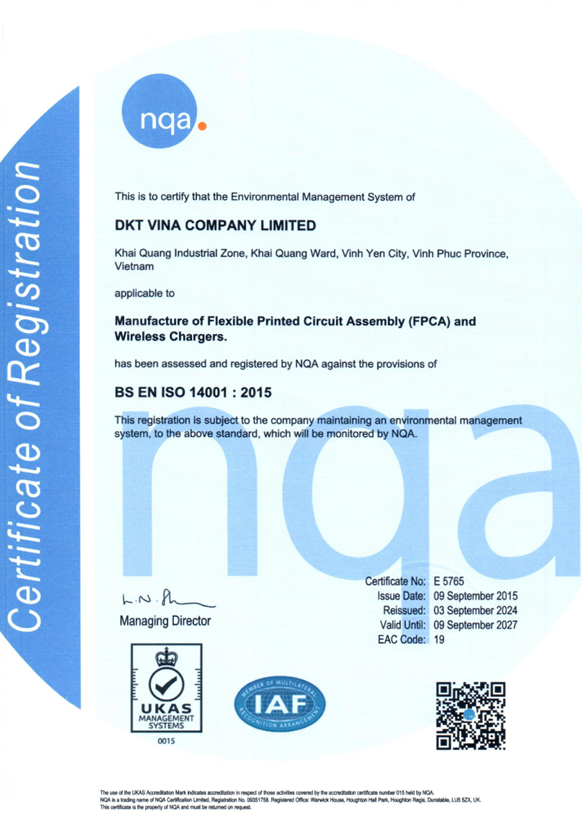
ISO 14001
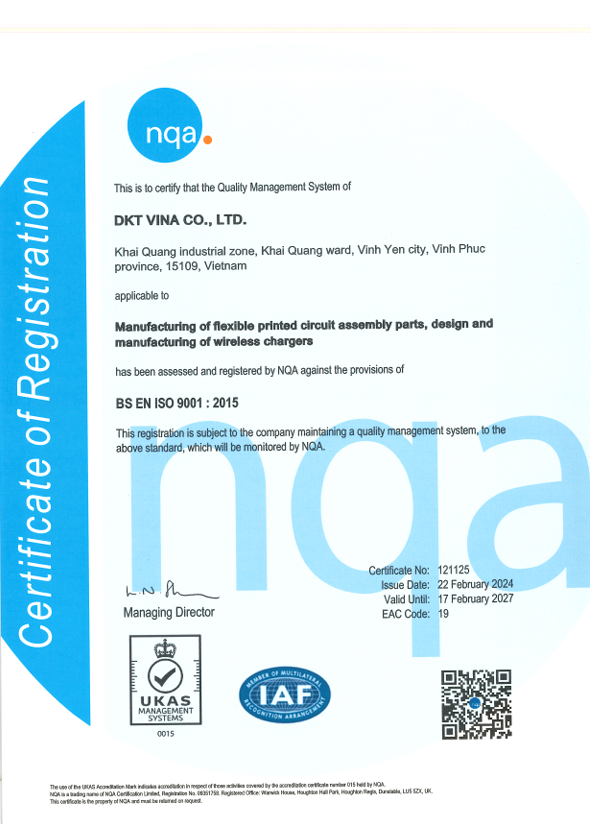
ISO 9001
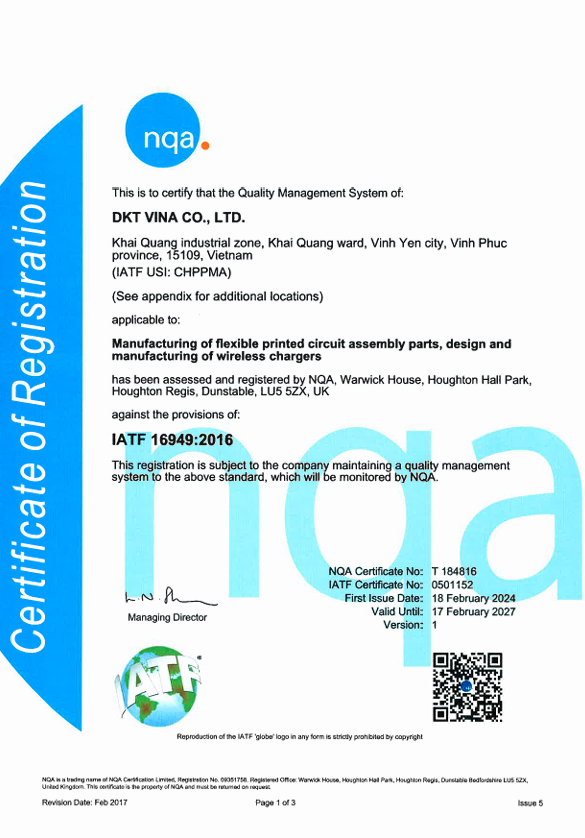
IATF 16949
DKT VINA greenhouse gas emission amounts and energy Use amounts
| Division | 2016 | 2017 | 2018 | 2019 | 2020 | ||
|---|---|---|---|---|---|---|---|
| Greenhouse Gas Emissions | SCOPE Classification Emissions | Annual Emissions (tCO2eq) | 5,960 | 6,878 | 6,283 | 8,363 | 8,884 |
| Energy Use | SCOPE Classification Use | Annual Energy Use (TJ/ir) | 26 | 30 | 28 | 37 | 39 |
Activities to Strengthen Environmental Safety Capabilities
| Name of Education | Education Cycle | Notes |
|---|---|---|
| Labor Safety Hygiene Education | Once Every 2 Years | Commissioned Education |
| Labor Safety Hygiene Education | Once Every Year | Commissioned Education |
| Drug Safety Education | Once Every 2 Years | Commissioned Education |
| Implementing Emergency Rescue for Emergency | Once Every Year | Commissioned Education |
| Implementing Fire-fighting, Evacuation Guidance, and Rescue Drills | Once Every Quarter | Self-education |
| Implementing Fire-fighting and Rescue Drills for In-house Self-defense Fire Brigades | Once Every Year | Fire Department. Security |
| Electrical Safety Education | Once Every 2 Years | Commissioned Education |
| Radiation Safety Education for Radiation Handlers | Once Every 2 Years | Commissioned Education |
S (Social Responsibility)
Our company has an awareness of fair trade via regular fair trade education and anti-corruption education and complies with fair trade policies and regulations via the establishment of in-house ethical management regulations and compliance with ethical management. We focus on fair competition and actively reflect it via surveys and opinions from our employees by signing a fair trade agreement with our partners.
DKT respects the human rights of its employees and stakeholders and strives to practice human rights management in order to fulfill its commitment to socially responsible management. To prevent direct and indirect human rights violations, DKT has established and complies with policies and standards including its Occupational Health and Safety Policy, Environmental Policy, Ethical Recruitment Standards, and Supplier Code of Conduct.
Human Rights Management Principles
| 1. Prohibition of Discrimination | 6. Prohibition of Child Labor |
| 2. Prohibition of Sexual Harassment and Workplace Bullying | 7. Guarantee of Fundamental Labor Rights |
| 3. Wages and Benefits | 8. Protection of Personal Information |
| 4. Compliance with Working Hours | 9. Human Rights and Occupational Health |
| 5. Prohibition of Forced Labor | 10. Human Rights Management for Suppliers |
Activities for Strengthening Environmental Safety Capabilities
| Division | Education Schedule |
|---|---|
| Fair Trade Education | Once Semi-annually |
| Ethical Management Education | Four Times Annually (once a year for new employees) |
Social Contribution
DKT Co., Ltd. actively participates in community contribution initiatives and carries out various social contribution activities through the voluntary participation of its employees. We strive to operate meaningful social contribution programs that provide practical support to local communities and can be sustained over the long term.
Key Activities
DKT
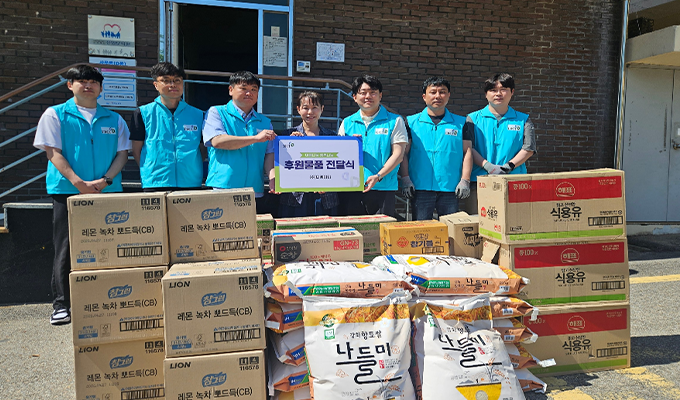
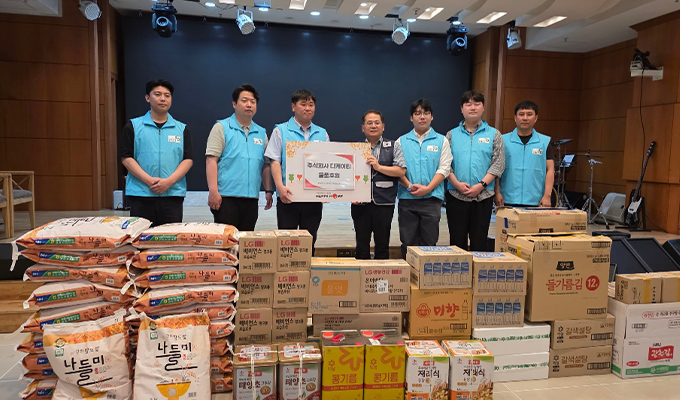
DKT believes that sharing the value created through its business activities with the local community is an important corporate social responsibility. We regularly provide support to local child welfare facilities and help children grow in a healthy and safe environment. Based on the voluntary participation of our employees, we practice various forms of sharing, including donations of goods, volunteer activities, and regular visits, and aim to grow together with the local community through mutual cooperation.
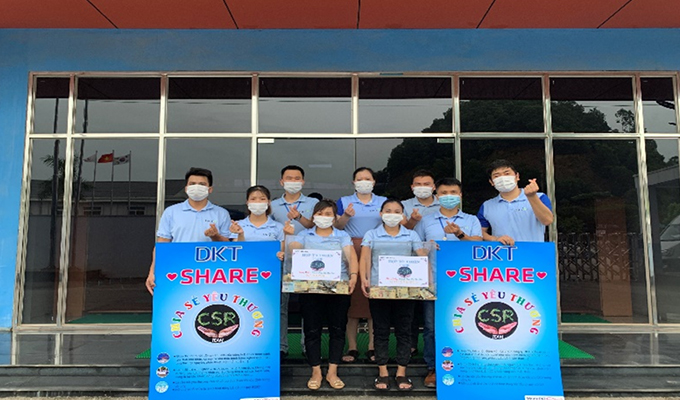

In accordance with our social contribution policy, DKT carries out a variety of community engagement activities. In 2020, we conducted the “DKT HOPE” fundraising campaign and home visits to support neighbors in need within the local community. We also participate annually in the “Blood Donation of Love” campaign organized by the industrial complex labor union. Since 2021, we have established a CSR team to plan and carry out volunteer programs and campaigns for both local communities and employees.
G (Governance)
: Where appointing two or more directors pursuant to Article 28 (3) of our articles of association, the concentrated voting system prescribed in Article 382-2 of the Commercial Act does not apply.
2) Written Voting System: Pursuant to Article 25-2 (1) and (2) of the company's articles of association, a shareholder may exercise his or her voting right in writing without attending the general meeting, have the agent exercise his or her voting right, and the agent shall submit a document (power of attorney) verifying his or her authority prior to the general shareholders' meeting.
3) Electronic Voting System: Our company has adopted and implemented an electronic voting system.
Main Contents of the Board of directors Operating Regulations
| Division | It shall be comprised of all directors appointed at the general shareholders' meeting | |
|---|---|---|
| Times to be Held | Regular board of directors | Held within 45 to 90 days after the end of each quarter |
| comprised of all directors appointed at a general shareholders' meeting | Held at any time as necessary | |
| Convocation Authority | Chairman of the Board | |
| Call-up Procedure | Each director shall be notified of the time, place, and agenda of the meeting by not later than 2 days prior to the date of the meeting. In cases of urgency, notification may be provided by not later than the day prior to the date of meeting. | |
| How to Resolve | It shall be approved with the attendance of a majority of the directors and the consent of a majority of the directors. Where the ratio is set higher by Acts and subordinate statutes or the Articles of Incorporation, the provisions of Acts and subordinate statutes or the articles of association shall apply. | |
| How to Put Forward Agenda | Crucial matters concerning the company prescribed by the Commercial Act, the articles of association, and the board of directors' regulations | |
| Minutes | The minutes shall be prepared concerning the proceedings of the board of directors (the minutes shall be sealed or signed by the directors present at the meeting, stating the agenda, the guidelines of the procedure, the results thereof, those who are against and the reasons therefor) | |
Primary Contents of the Board of Directors Operating Regulations
As of the base date of this report, our company has established an internal trade committee and composed of three outside directors.
| Purpose of Installation | Performing the role of deliberating on large-scale internal transactions exceeding a certain scale in order for strengthening the internal control of the company over internal transactions and to enhance the efficiency of supervision over unfair support activities |
|---|---|
| Key Authorities |
① Authorization for internal transactions ② The right to order an ex officio investigation of internal transactions ③ The right to propose corrective action for internal transactions |
422-1 Cheongcheon-dong, Bupyeong-gu, Incheon TEL : 070.4324.3293 | FAX : 032.516.5614
Copyright 2017 DKT Co., Ltd. ALL RIGHTS RESERVED


